Voice Rescue -
The Blog

Welcome to the Voiceology Voice Rescue Blog — a place for singers, teachers, speakers, performers, and everyday voices looking for healthier, freer, and more sustainable vocal technique. Here you’ll find practical vocal advice, breathing tips, warm-ups, recovery ideas, teaching insights, and encouraging guidance inspired by Marion Rouvas and the Voiceology approach to vocal health, strength, and longevity.

Peak Performance for Singers
One of the most disappointing feelings for your typical high-achiever or highly-skilled practitioner is the sense that a performance didn’t go to plan and wasn’t ‘a personal best’.
You work tirelessly on mastering technique, rehearse in perfect sequence every note - the soaring and the soft-aching that’s meant to have everyone lean in - and then, after the performance you wonder what on Earth happened to the magic!
Did you forget everything you knew?
Did your body rebel because of the pressure?
Was your training completely inadequate?
Are you just not good enough?
One of the stand-out feelings of my career was the sense that after a huge performance, I had somehow disappointed everyone - even though I won!
This is when I understood that there is a whole different toolkit for ‘peak performance’ that begins with training and ends with the moment you’re off the stage - whatever that stage may look like.

Lose Control to Gain Control
At first, it sounds completely backwards.
After all, most singers come to lessons because they want more control. They want control over their breathing, their pitch, their vocal range, their tone, their high notes, and their performance nerves.
Yet one of the biggest obstacles to great singing is often the very thing we think is helping us- trying too hard to control everything.
Many singers spend years gripping, pushing, forcing, and over-managing their voices. They tighten their throat muscles, raise their shoulders when breathing, push extra air through the vocal cords, and try to ‘hold on’ to difficult notes. The result is usually frustration, vocal fatigue, and a voice that never quite feels free.
The irony is that the harder we try to control the voice, the less control we actually have.

Your Voice Is An Instrument Just Like Any Other
One of the most important things singers can learn is to start viewing the voice as an instrument — not simply as something that should “just work.”
No pianist would expect to sit down at a piano for the very first time and perform a concerto without training.
No athlete expects to compete professionally without conditioning and technique.
Yet many singers place enormous pressure on themselves to perform difficult songs without ever properly understanding how the voice functions.
The voice deserves the same respect, patience and development as any other instrument.

Understanding Breathing and Vocal Balance
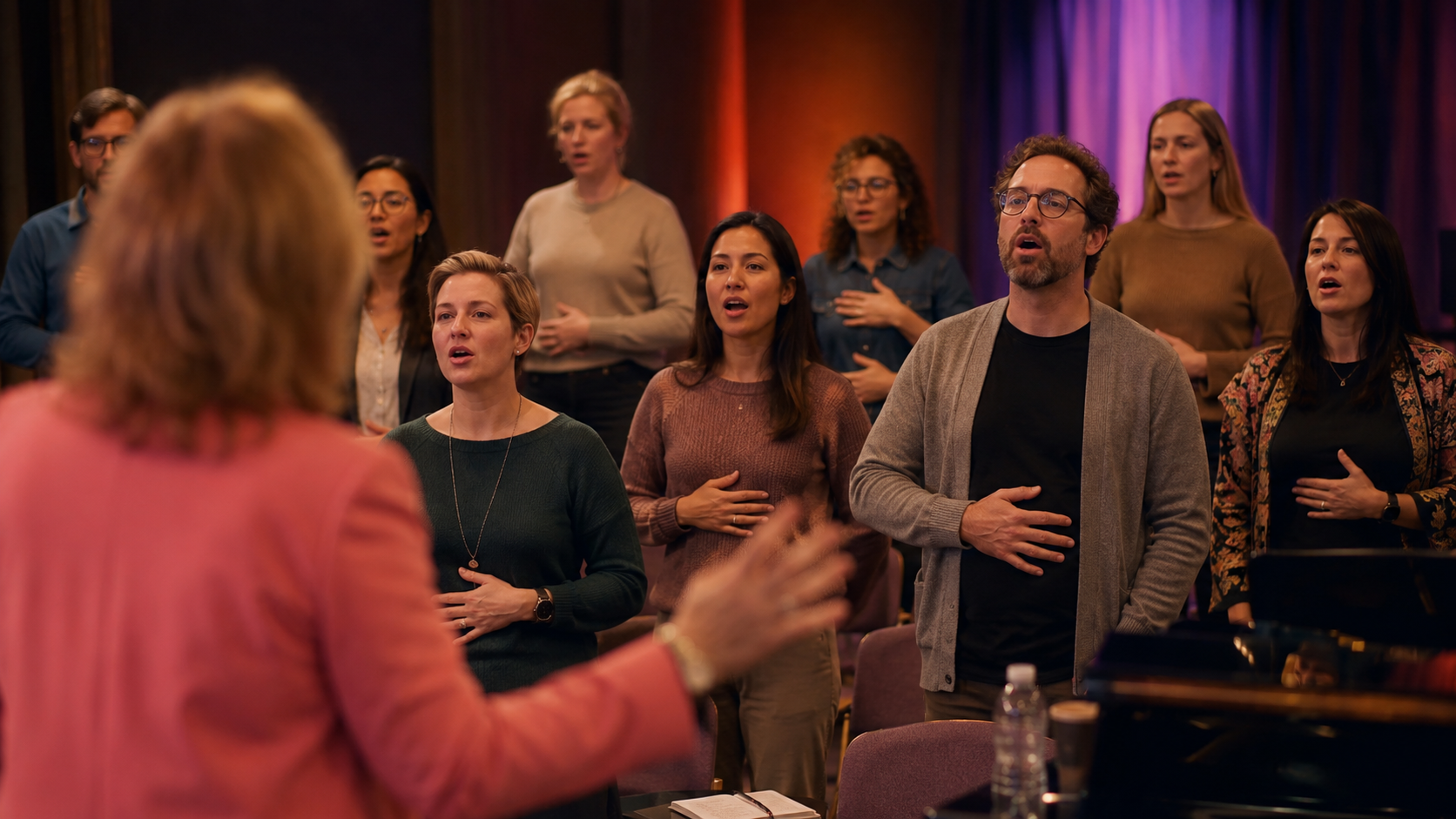
Breathing is one of the most talked about — and often misunderstood — aspects of singing.
Many singers are told to:
“support more,”
“push from the diaphragm,”
“take bigger breaths,”
or “sing from the stomach,”
yet very few truly understand what balanced breathing should actually feel like.
The truth is, breathing for singing should never feel forced or panicked.
Healthy breathing creates freedom.

Why Warm Downs Matter
Most singers understand the importance of warming up before singing.
Far fewer understand the importance of warming down afterwards.
Yet warm downs can be one of the most valuable habits singers develop for long-term vocal health.
At Voiceology, we often say:
The shorter the performance, the longer the warm up.
The longer the performance, the more important the warm down becomes.
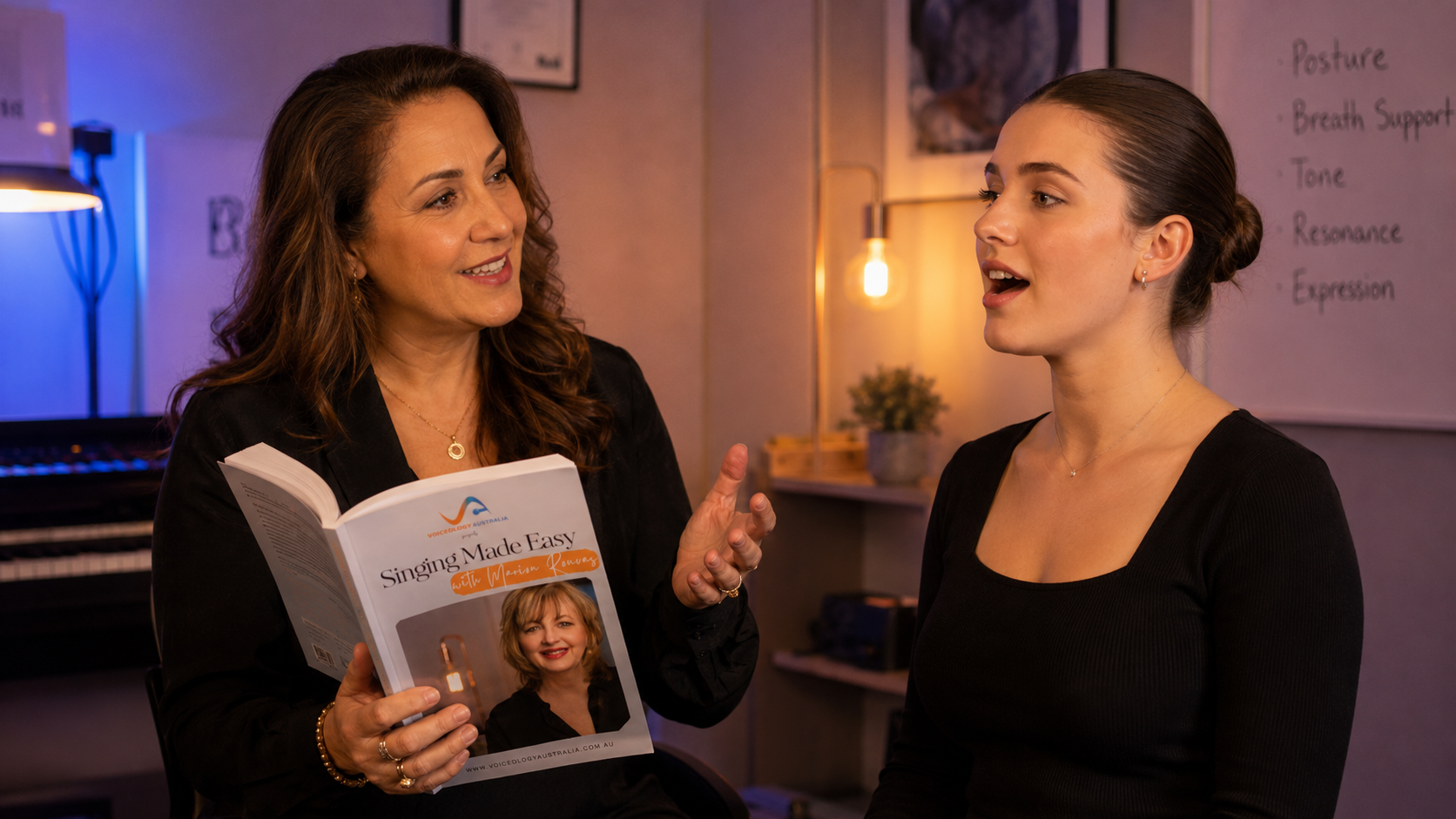
Building a Foundation for the Voice
One of the greatest gifts a singer can give themselves is a strong vocal foundation.
Without a foundation, singers often spend years trying to “fix” problems that could have been prevented in the very beginning:
vocal strain,
unstable high notes,
breathiness,
cracking between registers,
fatigue,
lack of endurance,
and inconsistent tone.
A healthy voice is built — not forced.

Producing Sound Versus Making Sound
There is a very big difference between producing sound and simply making sound.
Many singers can make a loud sound.
But not all singers are truly producing sound in a healthy, coordinated and sustainable way.
This distinction is one of the most important breakthroughs a singer — and a singing teacher — can understand.

Connecting The Registers — Finding One Complete Voice
One of the most common frustrations singers experience is feeling as though they have “different voices” instead of one connected instrument.
Many singers can comfortably sing lower notes in chest voice and lighter notes in head voice, yet the middle feels unstable, unpredictable or weak.
This is what singers often refer to as “the break” or “the hole” in the voice.
At Voiceology, connecting the registers is one of the most important parts of building vocal freedom and longevity.
Because once the registers begin working together correctly, the entire voice changes.

Let’s Talk About Breathing
In my opinion, breathing is one of the most misunderstood — and overcomplicated — parts of singing.
The truth is…
Less is more.
The only real difference between speaking and singing a note is airflow.
The sooner singers understand that, the easier singing becomes.
Try this:
Say naturally:
“Hi, how are you?”
Notice how relaxed and effortless that feels.
Now stretch the words out:
“Hiiiiii… Hooow arrrre yooouuuu…”
That’s singing.